
Our Blog Posts


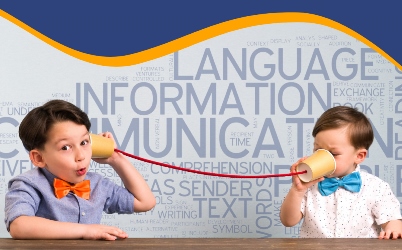
From Words to Wisdom: Nurturing Your Child’s Communication Skills
“Children learn more from what you ARE than what you TEACH.” – W. E. B. DuBois
In this blog we will talk about how one can help build an everlasting bonding relationship with their children through effective and open communication that will act as the nucleus of any successful educational experience for their little ones.
We at Manav Sthali Global School have always supported this ideology that the best parent-child relationships are characterised by positive communication and interaction during child’s early years. It is well known to everyone that good communication constitutes as an important parenting skill. Every single interaction that you have with your child is a form of communication. It’s not just about the words you say: The tone of your voice, the look in your eyes and the cuddles you bestow on – all convey messages to your child. Children begin to form ideas and beliefs about themselves based on how their parents communicate with them. When parents communicate effectively with their children, they show them admiration and respect. They begin to feel that they are heard and understood by their parents, which further augments their self-esteem and self-worth.
Talking with your child should be an important daily event. But, usually it has been witnessed that parents are sometimes held up with their busy schedules. So, they find it convenient to keep the conversation with their children light and quick so that they can move on to their next thing on their “To-Do” List. This has become a harsh reality. Despite spending hours with your child under the same roof, one can seldom squeeze out some quality time to spend with your little fledgling.
Here are few strategies that parents can use to build healthy relationships that will benefit and support their child through their learning progression:
- TUNING IN: THE ART OF ACTIVE LISTENING : – Lending your ear helps children to feel heard and understood. By using gestures such as encouraging smiles and affirming nods you can show that you are engaged with what your child is saying and really care. Getting down to the same eye level as your child as they speak to you can help them feel safer and more connected to you. Show that you are listening attentively to what they have to say by asking them questions like “What?” “Why?” and “How?”. This also helps your child to improve their own communication skills by teaching them how to tell a story and what details to include.
- REFLECTING ATTENTION: CAPTURING FOCUS THROUGH YOUR EYES : – Every time you talk to your child or when your child is talking to you, maintain eye contact. Maintaining eye contact indicates that you are active and attentive in the conversation. If you cannot hold eye contact, get on your knees or sit down, so your eyes are on the same level as his/her. This will encourage open and transparent communication.
- EMBRACE POSITIVE PRACTICES: DO’S FOR EFFECTIVE COMMUNICATION : – “Don’t hit your sister/brother”, “Don’t sit like that” one often says this to the little ones. You, as a parent know what you don’t want to happen, so you lead in with a “DON’T” statement. Even though this statement would convey the message rightly of not doing a particular thing, but the downside of “DON’T” statements prove that you fail to promote the positive behaviour you want to see. Therefore, you are more likely to reinforce the behaviour you don’t want. Instead, you should use more respectful “DO” statements. Swapping your “DON’TS” for “DOS” can look like this: “Play gently with your sister. “or “Please keep your back straight while sitting.”
- A PALETTE OF POSITIVITY: PAINTING CONVERSATIONS WITH GENTLE WORDS :- Kind words create a respectful relationship and better communication with your child. It is true that children who are spoken to with appreciation and respect also have better self-confidence, which allows them to prosper. On the contrary, unkind words leave them feeling disliked. Some examples of kind words are: “Thank you for helping me with the dishes.” “You did a great job of getting your room clean.” “That really makes me feel good.” “I love you “and so on.
- REFLECTIVE LISTENING: A MIRROR TO EMOTIONS :- A great way to show your child that you are paying attention and care about what they have to say is by acting like a mirror. Repeat what they say to you using different words. For example, if your child says, “I’m not playing with Sam/Samira anymore,” you could respond with, “You are not playing with your friend anymore? Why? What Happened?” This leaves room for your child to express their emotions without judgment. You might be surprised at how much they have to say!!
- FROM PARENT TO COACH: FOSTERING EMOTIONAL RESILIENCE :- They say that the ability to listen is as important as the ability to speak. In doing so, you can develop an emotional bond essential for establishing and maintaining mutual respect. Children who grow up in families that spend time talking about emotions are more academically successful, have better friendships, and can handle difficult social situations more effectively than children whose families do not talk about feelings. To help your child develop emotional quotient, it is important for them to learn how to express their feelings. When children learn to articulate their feelings, listen to what they have to say with empathy and without judgment. ‘CONSIDER WHAT LIFE LOOKS LIKE THROUGH THEIR LENS.’ If your little one is expressing his/her feelings in a non-verbal way – for example through a temper tantrum or laughing and having fun doing an activity they enjoy – help them put it in words to how they feel, such as when they feel happy, sad, relaxed, hurt, scared, hungry, proud, sleepy, angry, helpless, irritated, embarrassed or joyful.
- THE BEHAVIOR-COMMUNICATION CONNECTION: ANCHORING SKILLS IN ACTION : – If you are upset with your child about something, make sure that your criticism and comments are directed at their behaviour and not at them as a person. For example, instead of “I don’t like that you are messy.” instead you can say “I don’t like it when you leave your clothes all over the floor.”
- GUIDING LIGHTS: LEADING BY EXAMPLE : – Consider pushing the envelope through your leading example. Parents are children’s introduction to the world. What your child sees you doing is as important as what they hear you say. Getting your kids to open up to and confide in you will surely help to build and maintain conviction and trust between both.
- GUIDING WITH CLARITY: RATIONAL APPROACH TO CORRECTIONS :- Never load your child’s mind with comments like ‘Stop behaving like this ‘or ‘This is not how it is done’ as these correcting remarks would never be enough to instill a new behaviour in your child. What is essential is that a calm explanation should also be provided for it. Giving a composed clarification will help your child understand the implications of their behaviour for others. For Instance – If your child teases another child for wearing glasses, explain to your child that wearing glasses helps the other child to see well. Also, remind your child kindly that teasing can hurt others’ feelings.
- FUELLING PROGRESS: FEEDBACK AS A GROWTH TOOL:– Show your child the value of feedback. Teach them to receive criticism positively and use it as a tool for growth. Additionally, teach them to provide constructive feedback to others, promoting a culture of improvement.
To conclude, the world can be overwhelming for the children as good communication is the heart of harmonious homes and is the central key to maintain a healthy relationship with them. Just remember that it is this nurturing communication and cooperation where your child can truly thrive and eventually blossom into a responsible, empathetic, and an empowered adult.


STRENGTHENING ONLINE LEARNING AMIDST DELHI WATER AND FLOOD CRISIS
“Technology will not replace Great Teachers but Technology in the hands of Great Teachers can be transformational”
– George Couros
Manav Sthali Global School has always chosen to place itself at the forefront of developing positive learning school of thoughts that help shape the growing minds and to keep their impetus constant even during the unprecedented times. Considering the alternative of no schooling, the school believes that Online Mode of Learning has always proved as a significant tool to sustain continuous growth and progress of children during the times of crisis.
The recent water logging and flood crisis in various parts of Delhi proved as a challenging time for all the Delhiites. Many schools in the capital city were forced to close down, and students were unable to attend classes in person. Keeping in mind with minimal disruption to the students’ learning journey; a renewed focus of Online Classes came back into action at MSGS that helped the pupils to keep up with their regular course of studies. All key functionaries and teachers quickly adapted to the situation and put their shoulders to the wheel to create online lesson plans for their students to lead with a smile.
The school feels proud of the way that children rose to the challenge of virtual learning and showed great resilience and determination in alliance with parents’ unflagging dedication to their children’s education that helped them overcome the challenges of virtual learning.

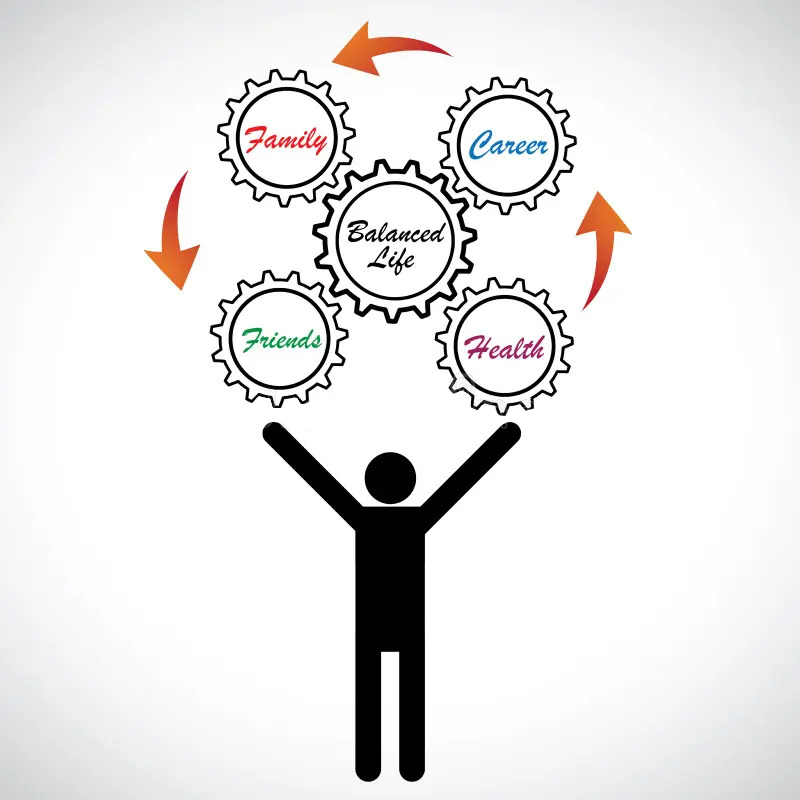
IMPORTANCE OF QUINTESSENTIAL WORK-LIFE BALANCE – Happy Homes Raise Happy Kids
Your children get only one childhood. Make it memorable.”
– Regina Brett
In today’s challenging and dynamic work environment, it is crucial to realize a healthy work-life balance for overall well-being and success. However, Indian dual working parents face unique challenges in juggling their careers with their familial obligations. Striking a right equilibrium between professional responsibilities and family duties is a big challenge and can be draining.
Recent research done by the Journal of Management Research has revealed that having an unhealthy work-life balance brings forth an increasing number of behavioural problems and insecurities regarding emotional regulation in children and adolescents.
Remember if your work-life balance is delicate, it can become as exhausting as an obstacle race. This blog will help in unravelling the importance of promoting healthy work-life balance for all Indian dual working parents and discuss several ways to bridge this gap and create an all-encompassing harmonious environment at your home as well as at your workplace.
Here Are Some Tips That Can Help You with Your Work-Life Balance While Raising Kids:
- Build your work-life balance with baby steps. Drastic changes may not work out for you. Set small and specific goals that can help you move forward.
- Learn to set your priorities according to your real-life preferences.
- Perfection is out of reach. Try not to be hard on yourself as the great poet Alexander Pope once aptly quoted that, “To Err is Human.”
- Enjoy your Me -Time and those special moments with your family and friends. Try to unplug yourself from checking your official work repeatedly as this would help to find yourself more present and connected with your kids and family.
- Try for some exercise and meditation sessions. It will help release the secretions of your good hormones in your body finally reducing your stress levels and making you feel good and happy.
- Try to do at least one thing you love every day.
- Ask for support. Remember, you are a parent, not a superhero! Recognize your limits and ask for extended help when you need it.
- Make a contingency plan with someone you trust, like a partner, a parent, or a friend. This will make sure that unexpected events, like having to pick up your child from school early, are covered.
️BENEFITS OF ACHIEVING GOOD WORK AND LIFE BALANCE WITH CHILDREN
- You will feel less stressed, healthier, and more energetic, and better able to make decisions.
- It will help you prevent burnout at work.
- It is better for your children, as they will spend more quality time with you.
- It is good for your relationships with your loved ones.
And yes, you can involve your children in this balance. Invite them to help you while planning the activities the family is going to do together. They can also help you with the shopping list or choose the meals you will cook weekly. They can start helping with small household chores when they are young, like picking up their toys after playing with them. This way, you can spend more time together and less time cleaning up the house.
Always remember that “Children learn to smile from their parents” and by building cushion time into your busy schedules, you not only avoid an unnecessary cortisol hormone rush, but you also stand a better chance of preserving your correct work-life balance!!




VISION OF EDUCATION FOR 21ST CENTURY: INTERNATIONAL MINDEDNESS & INTERCULTURAL AWARENESS
We come from a land where the idea of the whole world being one family is rooted in our ethos – ‘Vasudhaiva Kutumbakam’
Narendra Modi
In the last few years, education has made a complete shift in pedagogy, but only for the best. Our society is evolving increasingly diverse, with people from diverse backgrounds, religions and ethnicities living, studying and working together as one community. In present scenario the International Curriculum in schools is characterized by the same international philosophy and approach. It aims to provide learning experiences for small kids catering to both local and global context. Developing practical skills, values to connect with people across the boundaries, leadership skills, innovations from an early age, such initiatives are bound to put students ahead in this competitive world.
Under great educational sagacity of Hon’ble Dr. V.K. Bhatnagar, Founder Chairman Manav Sthali Global School who held the view that fraternal bonding amidst individuals and between societies, and as well as the interaction between the two is the sole means to world peace. He opined that when school educates their students in international pedagogy for world class education, they gradually evolve to become responsible global citizens making productive contributions to the world as one global family. In today’s interconnected and globalized world, cultural diversity and international mindedness have become more important than ever.
The curriculum of the school based on the motto ‘Beyond the classrooms, Beyond the Books’ truly believes that children of this new millennia need more than just a traditional curriculum to be educated. In the recent times their requirements have traversed from the conventional classroom setting to new age erudition that mainly comprises of – thinking beyond the box through project-based experiential learning with the main support of Information Technology that can lay emphasizes on the importance of critical thinking, creativity, collaboration and effective communication at large. To help students fulfill these requirements, the schools with international curricula keeps its curriculum updated constantly through collaborative efforts by properly tailoring, analyzing and understanding regional needs in contrast with those of other nations.
The modern age schools are now gearing up to facilitate children to use their creative bent of mind, viewing their world through an internationally-minded lens and understand how people at large around the world work and live differently. Students imbibing international curriculum learn to develop a profound respect for all cultures and the world as a whole and to develop a generation of future leaders who value global connection and are able to collaborate with people from different cultures and nations effortlessly.
On the whole, children can pursue their interests inside and outside of the classroom leading them not only highly qualified and groomed for the academic arena but also having a fun time development during their schooling foundation years!!