June 1, 2026
Family-sitting-in-bank-office-meeting-with-financial-advisor_-1.jpg

The Transformative Impact of Purposeful SPMs at MSGS

Mrs. Tuteja still remembers her child’s first Students’ Progressive Meet (SPM) at Manav Sthali Global School.

Her son Viraj had just entered Grade II. He was bright, imaginative and endlessly curious at home. Yet in the classroom, he appeared quieter than expected. His notebooks were neat. His grades appeared in order.

Still, there was a lingering question in her mind. Was her son truly progressing or simply coping in his class?

Like many other anxious parents, she walked into the SPM prepared to discuss her ward’s grades. She walked out with something far more meaningful, a clear understanding of her child’s learning journey and a shared plan for his growth that he was being carefully guided each day.

That is the true impact of a purposeful SPM at MSGS.

  • BEYOND GRADES. BEYOND REMARKS.

At MSGS, SPMs are not routine meetings. They are purposeful conversations where parents and educators come together to see the complete picture of a child’s learning and development. The focus is neither on offering mere compliments nor on highlighting any shortcomings. Instead, discussions centre on meaningful observations, genuine strengths, areas requiring support and practical strategies that can help a child thrive both in school and at home. Every SPM reflects the school’s commitment to nurturing confident learners, expressive thinkers, responsible classmates and self-aware individuals.


HERE, PROGRESS IS SEEN IN THE JOURNEY A CHILD MAKES FROM HESITATION TO CONFIDENCE, FROM CURIOSITY TO CLARITY AND FROM GUIDANCE TO INDEPENDENCE.

QUESTIONS THAT MAKE SPMs MEANINGFUL at MSGS

A focused SPM is guided by meaningful reflection and open dialogue. These are the questions that bring clarity and highlight the active role of MSGS educators.

  1. How is my child progressing beyond marks?

Grades tell one story. Behaviour tells another. During an SPM, parents often hear things like,

“He is becoming more confident in sharing his ideas during class discussions.”

“She works well in groups but hesitates to speak first.”

These small observations matter. They show whether a child is becoming confident, curious and comfortable in the classroom. Because real progress is not only about scoring well. It is about understanding well and participating willingly.


  1. What are my child’s emerging strengths?

Every child shows sparks of something special.

Sometimes it is the LEADERSHIP they show during class group discussions.

Sometimes it is the CREATIVITY they bring to school activities.

Sometimes it is the EMPATHY they show towards their classmates. 

An SPM helps bring these qualities into focus. When parents hear what their child naturally does well, they begin to see beyond academics. AND WHEN A STRENGTH IS RECOGNISED EARLY, IT CAN BE NURTURED BOTH IN SCHOOL AND AT HOME.


  1. Which areas require focused guidance?

No child is perfect and that is perfectly fine. An honest SPM conversation might sound like,

“He understands concepts well but needs to organise his answers better.”

“She knows the answer but hesitates to speak aloud.”

“He gets distracted after long tasks.” 

The real value lies in how this guidance is shared. At MSGS, it comes with suggestions. What can be done in class. What can be supported at home. It creates a shared plan, backed by a constructive roadmap for meaningful progress.


  1. What can we do at home to strengthen the learning of our child?

Parents often ask this question and the answer is quite simple.

  • Encourage reading aloud.
  • Have small discussions at dinner about what was learned that day.
  • Create a fixed homework routine.
  • Appreciate effort, not just correct answers.

 SPMs help parents understand how small, consistent habits at home can quietly strengthen classroom learning.


  1. Is My Child Emotionally Secure and Happy?

This may be the most important question of all.

Is my child making friends and feeling a sense of belonging?

Does my child speak up comfortably in class?

Does my child seem happy and settled during the school day?

 Teachers share what they observe. A child who feels safe and valued learns more freely. When parents know their child feels encouraged, it brings peace of mind that no report card can offer. Teachers discuss peer relationships, classroom engagement and adjustment levels, ensuring that well – being remains a priority.

When these conversations happen with honesty and warmth, an SPM stops feeling like an evaluation. It becomes a shared moment of understanding. And that is where real growth begins.


  • THE OUTCOME


The change in Viraj was not sudden nor was it accidental. It was the result of attentive observation, what comforted Mrs. Tuteja the most was knowing that her child had already been nurtured with patience and purpose.

Viraj’s class teacher had quietly observed him from the very first weeks of school. She had noticed his hesitation before answering. She had recognised his thoughtful thinking. She understood that he did not lack ability. He simply needed the right space to express it.

During the SPM, she gently shared with Mrs. Tuteja how Viraj was being nurtured in class. She explained how he was encouraged to participate when he felt ready, paired with supportive classmates who helped him feel more comfortable during group activities and appreciated by his teachers for every effort he made. Each step was guided by care and understanding, helping him feel secure, valued and increasingly confident in expressing himself.

There was no rush. No pressure. Just calm and nurturing guidance.

Hearing this brought comfort to Mrs. Tuteja. She realised her child was not overlooked in a busy classroom. He was being guided with care. At home, she followed the same rhythm. She listened more. She asked about his day. She encouraged him to explain what he had learned. She appreciated his effort, even when answers were incomplete.

Gradually, the difference became visible. Viraj began speaking with more ease. He volunteered occasionally

His smile in class grew more assured. His learning improved because he felt confident enough to try. For Mrs. Tuteja, the greatest joy was simple. Her child walked into school with self-assurance and returned home each day with a happy, radiant face and countless stories to share.

And this is what makes every purposeful SPM at MSGS so impactful. 

A teacher who notices. A parent who supports. A child who blossoms. 

When guidance at school meets support at home, confidence becomes a child’s strongest foundation.

At MSGS, every SPM strengthens this partnership and turns potential into progress.

February 27, 2026
341a7b03-009f-4b66-a6e3-c1263970dd49.jpeg

HOW CHILDREN DISCOVER THE LANGUAGE OF LEARNING

“Why does the sky change its colours?”

“What will happen if we mix these two colours?”

“Look! I found a different way to do it!”

“Why does this one float but that one sinks?”

“Can we try it again and see what changes?”

These simple, heartfelt expressions are not just casual remarks. They are children speaking the “Language of Learning.”

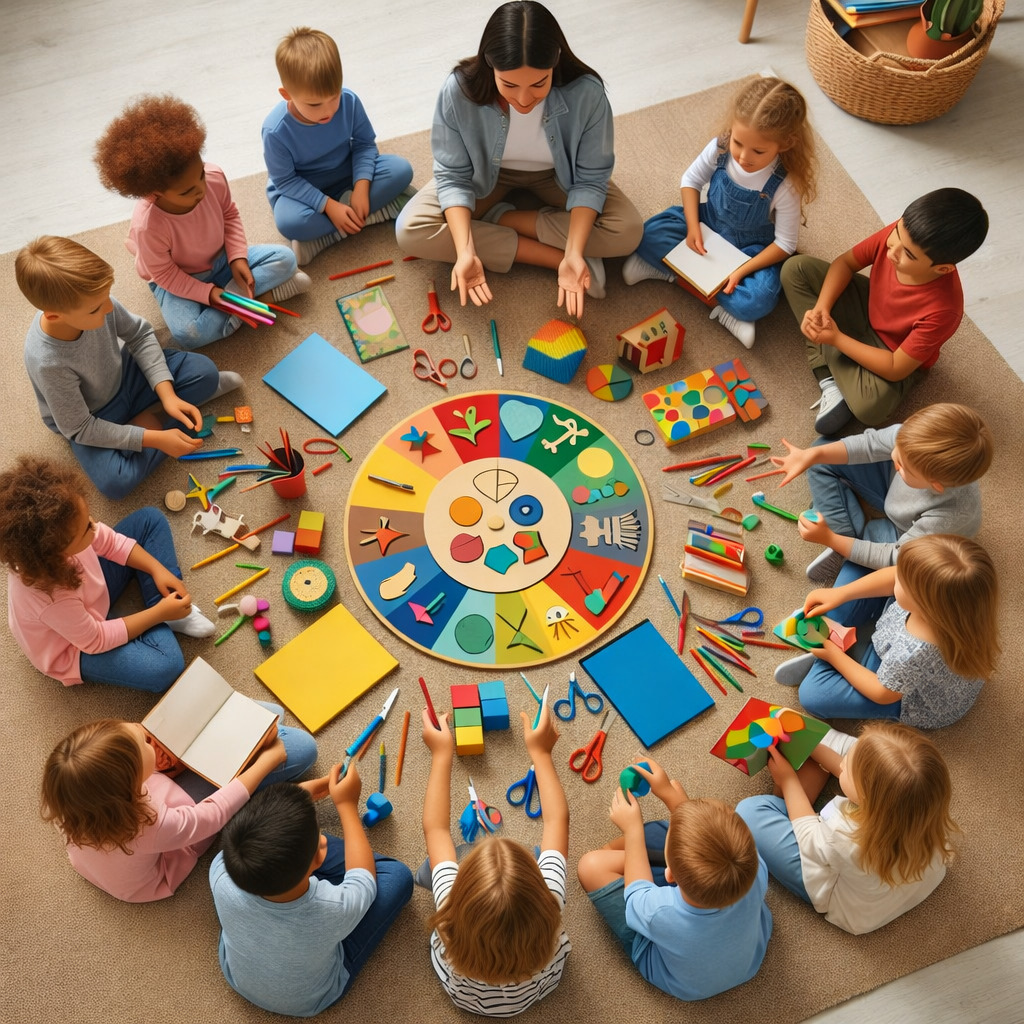
Within the nurturing spaces of Manav Sthali Global School, especially in our lively ‘Frolic Rooms’ and ‘Creative Learning Spaces’, learning reveals itself in gentle yet powerful ways. A child pauses in the middle of play, thinking deeply. Two friends whisper and test an idea. A teacher walks closer with a warm smile and softly says, “Come, let’s explore this together, I’ll show you how.”

In these small yet meaningful exchanges, curiosity begins to bloom into understanding.

Here, learning is never hurried. It unfolds through experiences, relationships and thoughtful guidance. It grows during shared stories, reflective conversations, hands – on exploration and joyful discoveries. When children feel safe, valued and heard, learning becomes something they embrace with confidence and delight.

For young learners, ideas are not confined to words. They take shape through movement, imagination, experimentation and persistence. Children build, draw, question, observe and try again. A play – based approach honours these expressions, recognising that thinking is often visible in actions long before it is spoken aloud.

In a play corner filled with block sets, children work together to build a tall tower. When it begins to wobble, excitement and curiosity rise together. “Why is it shaking?” one child wonders in amazement. “Maybe we should make it bigger,” another suggests. “Wait, hold this side… let’s fix it together,” comes a thoughtful reply.

The teacher kneels beside them and encourages, “Come children, let’s explore this together. Watch how we can make it stronger and sturdier.” Little hands adjust, press and balance. Smiles return as the tower stands steady once again. In these shared moments, children experience lessons of balance, stability and teamwork in the most natural and meaningful ways. Waiting for a turn or offering help becomes a lived lesson in empathy.

Science, too, unfolds through wonder. During an exploration activity, children place a leaf, a sponge, a stone and a plastic cup into water. All eyes watch closely.

“Wow! This one stays on top!” a child exclaims. “And look at that stone, it has gone down!” another adds in surprise. The teacher nudges them further, “Come, let’s explore this together and see what happens when we try one more object.” Through observation and comparison, children begin to understand the concept of “Floating and Sinking.”

Such inquiry driven experiences reflect our belief that learning blossoms most beautifully in the foundational years of childhood, when children are gently encouraged to question freely, explore fearlessly and understand that everything around them, even the smallest object, has a reason and a story to tell.

Outdoors, learning dances in the sunlight. Children chase their shadows, noticing how they stretch and shrink. Laughter blends with curiosity as they explore movement and begin to understand cause and effect through joyful play.

On the courts and fields, this energy shines through sports such as Table Tennis, Skating, Hockey and Basketball. With every swing, glide and pass, children develop balance, co – ordination and teamwork. And when a skill feels new or challenging, a coach steps forward reassuringly and says, “Come child, let’s try this together – I’ll teach you the first step.” In that simple moment, confidence blossoms and efforts turn into achievement.

Teachers remain attentive guides and warm encouragers. They listen carefully, observe thoughtfully and offer prompts rather than ready answers. Their reassuring presence helps children feel secure enough to take risks, make mistakes and try again.

This beautiful ‘Language of Learning’ extends beyond the classroom and finds a natural rhythm at home. When school and family walk hand in hand, children feel supported, understood and encouraged from every side. Parents play an essential role in strengthening this journey through everyday moments of connection –

  • Listen patiently and encourage children to share their ideas
  • Ask open – ended questions that spark thinking
  • Appreciate effort and encourage them to try again
  • Read, talk and imagine together
  • Guide gently with reassurance and warmth

With such consistent encouragement, children begin to see themselves as capable learners. Reflection brings quiet pride. They revisit earlier work and recognise their growth, building resilience and confidence step by step.

Across classrooms and homes, learning continues to speak softly yet powerfully. It lives in curiosity, shared smiles, excited shrieks and much needed guidance. At Manav Sthali Global School, our deepest endeavour is to nurture this learning abode as a second home in every sense a place where every child feels safe, cherished, understood and inspired to grow.

And perhaps it is in these tender, unassuming moments that one begins to realise that the most meaningful learning for any child truly begins with a warm smile and a simple invitation,  “Come, let’s explore this together.”

Stay connected as we bring you more delightful snapshots of curiosity in action.


December 25, 2025
LIFE-SKILLS-BLOG.jpg

Shaping Confident, Caring Learners Through Life Skills at MSGS

The nature of learning has undergone a profound transformation, moving far beyond the boundaries of textbooks and rote learning. Education today places equal emphasis on understanding, application and personal growth. Children are encouraged not only to acquire knowledge, but also to develop the ability to communicate clearly, manage emotions, make thoughtful choices and work positively with others. These essential abilities known as Life Skills shape how children learn, interact and grow within and beyond the school environment.

At Manav Sthali Global School, life skills are an integral part of everyday learning from the early years onwards. Through carefully designed classroom experiences, guided interactions and age-appropriate responsibilities, children are supported in developing confidence, sensitivity and independence in a natural and meaningful manner.

  • WHAT ARE LIFE SKILLS IN A SCHOOL CONTEXT?

Life skills are practical and emotional abilities that help children manage everyday situations with confidence and maturity. These include communicating needs clearly, working with others, managing emotions, making simple choices and taking responsibility appropriate to one’s age.

Following the International Early Years Curriculum (IEYC) in Nursery and Prep and the International Primary Curriculum (IPC) blended with the National Curriculum in Grades I to V, these skills are embedded naturally into classroom experiences rather than taught as a separate subject.

  • WHY LIFE SKILLS ARE ESSENTIAL FOR CHILDREN TODAY

When children are supported in developing life skills early, learning becomes more balanced and meaningful. Such children grow with confidence, resilience and emotional stability – qualities that positively influence both academic learning and personal growth.

Life skills help children to –

  • Express thoughts and feelings appropriately
  • Build healthy relationships with peers and adults
  • Manage emotions and handle small challenges calmly
  • Work cooperatively and respect different viewpoints
  • KEY LIFE SKILLS ACTIVITIES AT MANAV STHALI GLOBAL SCHOOL

Life skills at Manav Sthali Global School are nurtured through clearly defined, age-appropriate activities that form part of everyday school life.

  1. Listening Circles & Guided Conversations

Children share ideas, listen patiently and learn the value of taking turns in a calm and respectful setting.

  1. Learning Through Role Play

Through pretend play and guided enactments, children explore everyday situations, relationships and responsibilities.

  1. Team Tasks & Shared Activities

Group-based classroom activities encourage cooperation, planning and a sense of shared achievement.

  1. Developing Emotional Awareness

Stories, discussions and simple reflections help children recognise and manage emotions in healthy ways.

  1. Reflection Through Drawing & Writing

Age-appropriate journaling through pictures or words nurtures self-expression and self-awareness.

  1. Understanding Needs and Wants

Simple, practical experiences introduce children to making choices, saving and understanding value.

  1. Creative Expression Through Arts & Performance

Dance, music, art and drama provide meaningful outlets for creativity and confidence-building.

  1. Movement, Yoga & Play-Based Fitness
  2. Physical Activities help develop discipline, coordination, teamwork and emotional balance.
  3. Caring for the Environment Initiatives

Hands-on activities related to cleanliness, recycling and nature care build responsibility and awareness.

  1. Age-Appropriate Responsibility & Leadership Roles

Small classroom responsibilities and guided leadership opportunities foster confidence, empathy and independence.


  • THE EDUCATOR’S ROLE IN LIFE SKILLS DEVELOPMENT


At Manav Sthali Global School, educators play the role of mentors and role models. Through gentle guidance, encouragement and positive reinforcement. This nurturing and supporting approach allows children to learn from mistakes and grow with confidence.


  • BUILDING STRONG FOUNDATIONS FOR THE FUTURE

The life skills nurtured during the early and primary years form a strong base for academic progress and personal well-being. Children gradually develop confidence, independence, empathy and a sense of responsibility – qualities that support them at every stage of learning.

  • SUPPORTING EVERY ASPECT OF A CHILD’S GROWTH

At Manav Sthali Global School, education is designed to support the whole child. Along with academic learning, equal emphasis is placed on emotional growth, social understanding and practical life skills.

By creating a caring, structured and globally aligned learning environment, the school ensures that children grow into capable, confident and compassionate individuals ready for both school and life.


September 20, 2025
Nutrition-Activities-for-Early-Childhood-Education.jpg

Fighting Childhood Obesity One Healthy Bite at a Time

Not long ago, the biggest health concern for children was undernutrition. Today, the reality has upended – Childhood Obesity has overtaken undernutrition as one of the most crucial and alarming issues. This shift is not just about appearance or weight; it reflects a deeper challenge of lifestyle, food habits, and well-being in our fast-paced world.

Children are surrounded by temptations like brightly packaged chips, sugar laden drinks, and ultra-processed junk foods that are hard to resist. Unfortunately, these foods are designed to be good to taste and addictive but add very little value to a child’s nutrition. The result? A generation at risk of lifestyle diseases, reduced stamina, and lower self-confidence.

But the responsibility cannot rest with schools alone. Parents play a crucial role in shaping children’s food preferences and lifestyle patterns. Here are some meaningful ways families can help 

  1. REDEFINE DELICACIES – Healthy eating can be fun and creative. As a weekend treat, carrot, pea, and corn nuggets can be baked instead of fried, turning cooking together into a joyful activity. Everyday favourites can also be given a nourishing twist – for example, whole wheat vegetable wraps or chappati rolls filled with lightly sauced cheese/chickpeas and crunchy veggies make a wholesome meal. Even breakfast can be reimagined – plain milk first thing in the morning can sometimes upset a child’s stomach, but a fruit and yogurt smoothie with a spoon of oats or seeds provides gentle, gut – friendly energy to start the day.
  1. ACTIVE TOGETHERNESS – Family walks after dinner, cycling on weekends, or dancing in the living room – children are far more likely to stay active when the family does it together. Adding a few minutes of yoga stretches or mindful breathing, focusing on slow inhaling and exhaling, helps strengthen the body and calm the mind. These small daily practices support both physical activity and mental balance.
  1. HEALTHY VISIBILITY –  If fruits, nuts, and wholesome snacks are within easy reach at home while junk food is “Out of Sight,” children naturally reach for better options. For example, keeping a bowl of fresh fruits, carrot sticks, nuts or even roasted chickpeas on the kitchen counter makes it easy for children to grab a healthy snack, whereas chips and cookies stored in a high cupboard will become less tempting. This small change encourages mindful eating and builds healthier habits over time.
  2. CELEBRATE FOOD POSITIVELY – Instead of labelling food as “Good” or “Bad,” show children how balanced choices keep them energized, stronger, and in a better mood. For example, explain that having a colourful salad with grains, beans, and vegetables gives them the energy to play longer, concentrate better in class, and feel happier throughout the day. Framing food as fuel for their body helps children make mindful choices without feeling guilty or restricted.

When it comes to school lunchbox, variety makes all the difference. Here are some interesting yet simple lunchbox ideas that bring both taste and nourishment – 

  • Baked Mix Vegetable Cutlets with a Mint Dip
  • Millet Upma Muffins
  • Rainbow Veggie Frankie
  • Mini Millet Idlis
  • Cheesy spinach & Corn Paratha Pockets/Wraps
  • Sprouts, Chickpeas & Fruit Salad cups
  • Cottage Cheese & Veggie Pinwheels
  • Choco Banana Oat Balls
  • Coconut & Date Energy Bites
  • Quinoa and Corn Salad with Cucumber and Tomato
  • Baked Sweet Potato Wedges served with a curd-and-herb dip
  • Mini Whole Wheat Sliders filled with Black Chickpeas/Red Beans and Avocado Mash
  • Fruit and Yogurt Parfaits layered with Granola
  • Brown Rice and Vegetable Stir Fry
  • Stuffed Pita Bread Pockets with Cottage Cheese and Colourful Crunchy Vegetables

During community lunches at MSGS, children are encouraged to experiment with such swaps. For instance, packets of chips can be replaced by millet crisps accompanied with homemade dips, while sugary boxed juices can be swapped for refreshing lemonade with mint or chilled coconut water with lime. Even snacks such as Potato Patties, samosas, or rolls can be made healthier by baking them or using vegetable fillings, lentils, or whole wheat bases. Small changes like these make meals nourishing, tasty, and fun for children.

Students themselves can be heroes in this story – choosing water over cold drinks, joining a sport wholeheartedly, or even sharing healthy snack ideas with friends. After all, peer influence can be just as powerful as parental guidance.

The larger message is clear – Obesity is not a child’s problem; it is a community’s challenge. Schools, families, and children must come together to reverse this trend.

At Manav Sthali Global School, every initiative – whether it’s community meals, wellness workshops, or sports activities – aims to build not just brilliant learners but strong, energetic, and health conscious citizens of tomorrow.

Follow our blog for more such tips and inspiration to nurture healthy, confident children.


September 16, 2025
16th-september-2025-NEWSPAPER-1.jpg

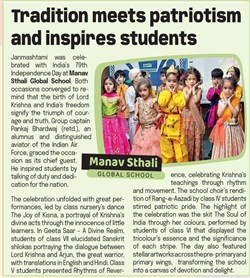
Article on the topic “Tradition meets patriotism and inspires students ” has been published in DelhiTimes dated Tuesday, 16th September 2025.